What Is Camera-First Leadership?


Camera-first leadership is the ability to communicate with clarity, credibility, and human connection when people experience your leadership through a camera or screen. It requires more than looking professional or delivering polished words. Leaders must understand how their presence, voice, body language, emotional intention, and message work together to build trust.
In today’s workplace, leaders regularly communicate through virtual meetings, recorded videos, livestreams, media interviews, webinars, and hybrid events. The camera is no longer simply a production tool—it is now one of the primary ways employees, clients, stakeholders, and the public experience leadership.
This shift is not temporary. Gallup reports that 52% of U.S. employees in remote-capable jobs work in a hybrid arrangement, while another 26% work exclusively remotely. For many leaders, communicating effectively through a screen is now an essential workplace leadership skill.
Rich “Trigger” Bontrager, America’s Leadership Broadcaster™, teaches camera-first leadership through his Lead Through The Lens™ philosophy and H.E.A.R.T. Method™. Drawing on more than 35 years of professional broadcasting experience, he helps leaders communicate confidently, connect deeply, and earn trust in every conversation, on camera, and on stage.
Why Does Camera-First Leadership Matter?
A leader may have the right message and still lose trust if the delivery feels distant, distracted, uncertain, or disconnected. Through a screen, small communication habits become highly visible. Poor eye contact, weak vocal energy, distracting body language, unclear framing, or a mismatch between words and emotion can weaken an otherwise important message.
Camera-first leadership helps leaders become more intentional about how they are experienced. It is especially valuable when leaders need to:
Build trust with remote or hybrid teams
Communicate organizational change
Deliver difficult or high-stakes messages
Represent their organization in media interviews
Lead webinars, virtual meetings, and recorded presentations
Connect with employees, clients, and stakeholders whom they may never meet in person
How Does the H.E.A.R.T. Method™ Strengthen Camera-First Leadership?
Rich “Trigger” Bontrager developed the H.E.A.R.T. Method™ to help leaders move beyond simply appearing on camera and begin connecting through it. The five elements are:
Human Connection — Treat the lens as a pathway to people, not a barrier between you and your audience.
Emotional Intention — Decide what you want people to feel, not only what you want them to know.
Authentic Authority — Communicate with credible confidence while remaining genuine, approachable, and human.
Relatable Story — Use relevant stories and examples that help people understand, remember, and act on your message.
Trust Through the Lens™ — Align your words, voice, expression, body language, and presence so that the audience experiences a consistent, trustworthy leader.
Together, these elements help leaders communicate in a way that feels prepared without becoming artificial, confident without becoming distant, and professional without losing human connection.
How Can Leaders Communicate Better Through a Camera?
Leaders can begin strengthening their camera-first communication with five practical habits:
Prepare the outcome. Before speaking, decide what the audience should know, feel, and do next.
Look through the lens. When delivering an important thought, look into the camera so viewers experience direct eye contact.
Use intentional vocal energy. Vary your pace, emphasis, tone, and pauses so your voice supports the meaning of your message.
Control the frame. Position the camera near eye level, use clear lighting and sound, and remove visual distractions that compete for attention.
Align the whole message. Make sure your words, facial expression, body language, and emotional tone communicate the same meaning.
The goal is not to perform for the camera or imitate a television personality. The goal is to remove unnecessary barriers so people can clearly experience the capable, credible, and human leader behind the lens.
Camera-First Leadership: Frequently Asked Questions
Is camera-first leadership only for virtual meetings?
No. Camera-first leadership applies wherever a leader communicates through a lens, including virtual meetings, livestreams, recorded messages, webinars, media interviews, hybrid events, social video, and presentations captured for remote audiences.
Who benefits from camera-first leadership training?
Executives, managers, entrepreneurs, spokespersons, educators, association leaders, public officials, and other professionals benefit whenever their credibility and influence depend on communicating clearly through a camera.
Does camera-first leadership require a professional studio?
No. Strong camera-first leadership begins with intentional communication, not expensive equipment. Clear sound, appropriate lighting, eye-level framing, focused content, and genuine human connection can significantly improve how a leader is experienced.
The Future of Leadership Is Camera-First
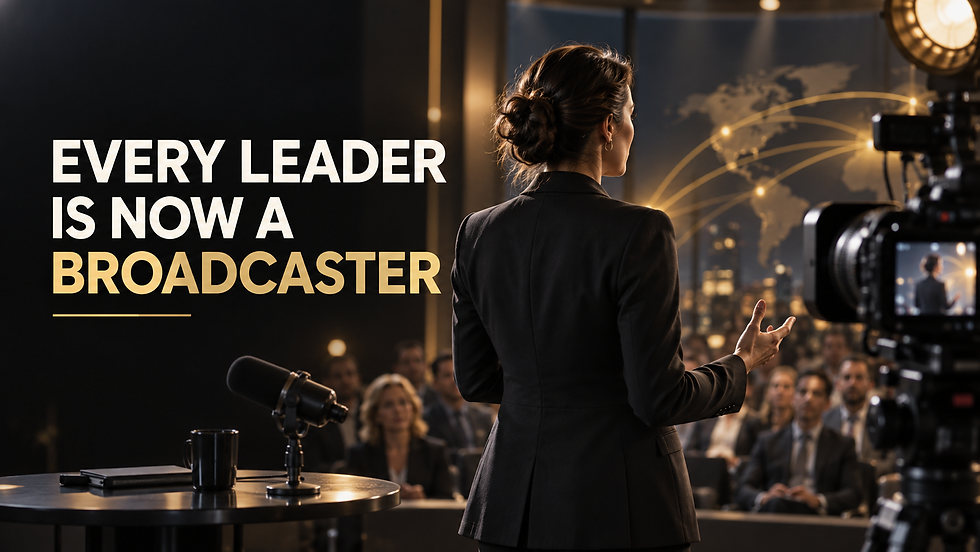
Every leader is now a broadcaster. The question is no longer whether leaders will communicate through a lens, but whether they can do it with the clarity, credibility, and human connection their audiences need.
Camera-first leadership does not replace strong in-person communication. It expands a leader’s ability to earn trust wherever people receive the message. Through Lead Through The Lens™ and the H.E.A.R.T. Method™, Rich “Trigger” Bontrager helps leaders and organizations turn the camera from a communication barrier into a powerful channel for connection.
Want to strengthen how you or your organization communicates on camera, on stage, and in high-stakes conversations? Explore ways to work with Trigger or contact him to discuss your leadership communication needs.


Comments