When Leadership Language Starts Sounding Like “Me, Me, Me”
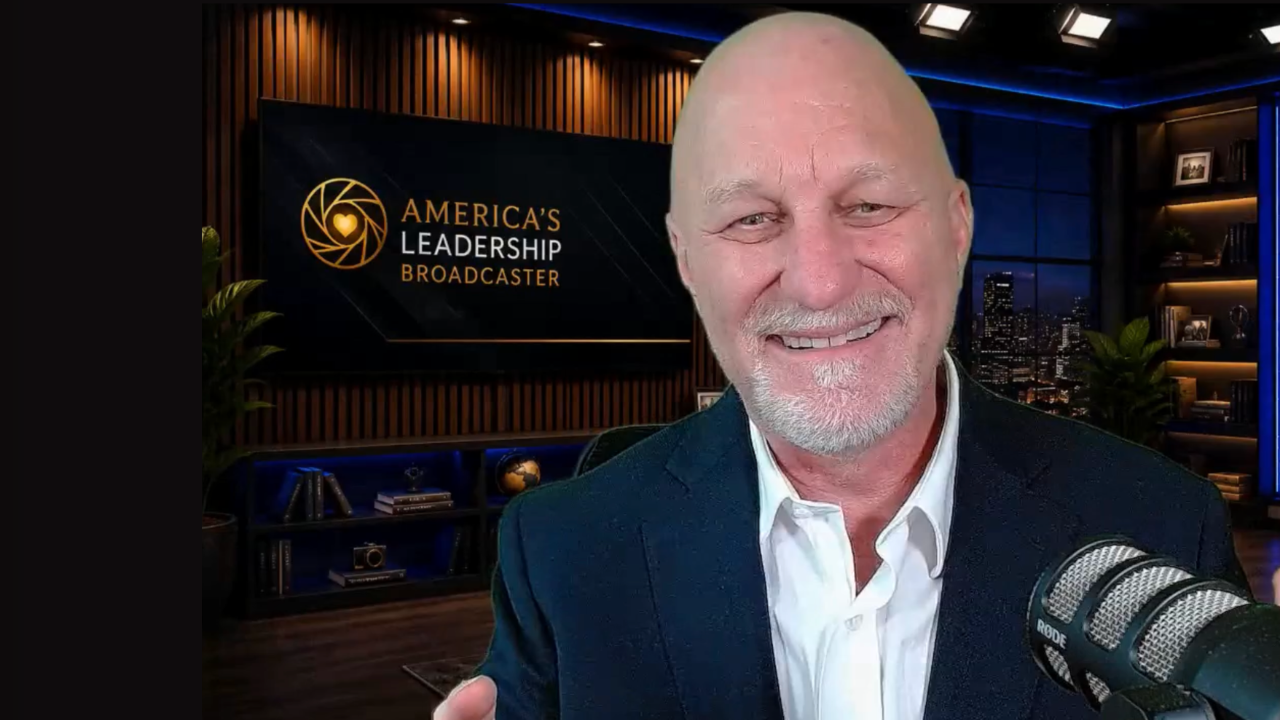
Lead Through The Lens™ | By Rich “Trigger” Bontrager

Leadership language shapes how people understand your priorities, your decisions, and their place on your team. When your message keeps returning to your accomplishments, your frustrations, and your importance, people may begin to question whose interests you are serving. After more than 35 years behind a microphone, I’ve learned to listen for where a leader puts the attention. Who gets the credit? Who carries the responsibility? Whose concerns receive a thoughtful answer? Those choices can strengthen trust—or start wearing it away.
Leadership language is the way leaders use words to explain direction, assign responsibility, recognize contributions, and respond to concerns.
Effective leadership communication gives people clarity about what matters, what happens next, and how they can contribute.
You can hear the shift when it happens. A leader begins by talking about the team, the mission, and the people they serve. But when the pressure rises, the language changes. Suddenly, we’re hearing how unfairly the leader has been treated, how much they have accomplished, or how much better everything would have gone if everyone had listened to them.
The people they are supposed to lead slowly disappear from the story.
Following Democratic gains in the November 3 midterm elections, President Donald Trump reportedly wrote on Truth Social: “I wasn’t on the Ballot, and if I was, we would have won IN A LANDSLIDE!” From a leadership communication standpoint, that response shifts attention from the outcome and the work ahead to the leader’s personal importance. The implied message is that the missing ingredient was more of him.
That pattern reaches far beyond politics. We hear it from executives after disappointing quarters, managers after losing clients, and team leaders when projects fall apart. A moment that calls for reflection becomes a defense of the person in charge. Instead of helping people understand what happened and how to move forward, the leader asks the audience to recognize their exceptional value.
When protecting the leader’s image takes over the message, trust is at risk.
Even a word as seemingly inclusive as “we” deserves closer attention. In recent comments about oil earnings, Trump said, “We’re making a freaking fortune.” Associated Press reporting placed the remark alongside his argument that higher oil prices generate money for the United States as a major oil producer. But that leaves a question a leader should be prepared to answer: Who is “we”? Producers, investors, government, and families buying gasoline can experience those prices very differently.

An unclear pronoun does not prove someone’s private motives. It does leave room for doubt about whose interests the leader is describing. People need to understand where they fit in the success being celebrated.
The same thing happens when a CEO announces, “We had our best year ever,” while employees are exhausted, positions remain unfilled, and compensation hasn’t moved. The financial result may be accurate. But the people who helped produce it may wonder whether “we” includes them when the benefits are distributed. A leader’s job is to explain that connection honestly, including where success has yet to reach everyone.
We have seen how quickly self-focused language can overwhelm a message. During the 2010 Deepwater Horizon disaster, then-BP CEO Tony Hayward said, “I want my life back.” He later apologized. Whatever exhaustion he was experiencing, those words placed his personal discomfort in the foreground during a crisis affecting other people’s lives and livelihoods. His audience needed to hear that he understood their suffering and accepted responsibility for the response.
Sometimes the distance comes through corporate language rather than personal complaints. After passenger David Dao was forcibly removed from a United Express flight in 2017, United CEO Oscar Munoz initially apologized for having to “re-accommodate” customers. His later response offered a clearer apology and took responsibility. The initial wording described a business process while people were reacting to a disturbing human experience. That gap made the response harder to trust.
There is research behind the concern about self-serving leadership. A study published in the Journal of Occupational and Organizational Psychology, involving 546 leaders and 1,718 followers, found that leader narcissism was linked to lower trust through self-serving behavior under particular organizational conditions, including highly competitive performance climates. The study examined behavior and workplace context, so it does not establish that saying “I” causes distrust. It does support taking self-serving leadership patterns seriously.
Giving people a voice matters. Gallup found that employees who strongly agreed they had opportunities to provide honest feedback about organizational changes were 7.4 times as likely to have confidence in their leaders’ ability to manage emerging challenges. That finding does not measure pronoun choices, but it reinforces the need for leadership communication to leave room for other people’s perspectives. When every conversation circles back to the person in charge, that room gets smaller.
My takeaway is straightforward: people need room in the conversation.
When every difficult question brings the discussion back to the leader’s achievements, intentions, or frustrations, that room gets smaller. Employees may begin filtering what they say. Concerns go unspoken. Agreement becomes easier to perform than to earn. A leader can mistake a quiet room for consensus when people have simply stopped believing their input matters.
That is why better leadership language requires more than replacing “I” with “we.” There are times when “I” is exactly what people need to hear. “I approved that decision.” “I missed your concern.” “I owe you a clearer explanation.” Those sentences put responsibility where it belongs. On the other hand, “We made mistakes” can spread accountability so widely that nobody appears to own it.
The same care belongs in how leaders give credit. If your team delivered the result, name the work they did. If you are celebrating increased revenue, explain what it allows the organization to do and who will benefit. If you are asking people to make sacrifices, be clear about what you and the leadership team are contributing. Specific language gives people something they can understand, question, and evaluate.
This is where my H.E.A.R.T. Method™ becomes practical.
Human Connection starts with acknowledging what people are experiencing. Emotional Intention asks whether you are speaking to help the audience or defend yourself. Authentic Authority means owning your decisions and being honest about what you don’t know. Relatable Story helps people see their place in the mission. Trust Through-the-Lens requires your words, tone, expression, and actions to support the same message.
On camera, those details become especially visible. You can say, “Your concerns matter,” while rushing through someone’s question. You can thank the team and then spend the rest of the interview describing your own brilliance. People hear the sentence, but they also notice where you invest your time and attention.
Before your next video update, staff meeting, interview, or difficult conversation, listen to your message aloud. Ask yourself who receives the credit, who carries the responsibility, and whose concerns you have acknowledged. When you say “we,” make sure you can explain who that includes. When you say “I,” make sure you are willing to own what follows.
Your people should be able to hear their contributions, concerns, and future in your leadership language. That is how you give them a reason to participate, speak honestly, and help move the vision forward.
How does your leadership language land with the people you serve? Through executive coaching, leadership communication consulting, and keynote presentations, I help leaders put the H.E.A.R.T. Method™ into practice so their messages build clarity, connection, and trust. Explore a leadership communication keynote for your organization, or book a conversation with me.
Rich “Trigger” Bontrager is America’s Leadership Broadcaster™, a leadership communication strategist, keynote speaker, and creator of the H.E.A.R.T. Method™. Drawing on more than 35 years in broadcasting, he helps executives and teams communicate with clarity, human connection, and authentic authority on camera and in person. Based in the Washington, DC area, Trigger serves organizations through Lead Through The Lens™.


Comments