What Do I Do With My Hands on Camera?

How natural gestures can strengthen your message, your presence, and your connection
You know your subject. You have prepared your talking points. You are ready for the interview. Then the camera comes on, and suddenly you have one more thing to worry about:“ What do I do with my hands?”
I hear this question regularly from clients preparing for media interviews, virtual, podcasts, and leadership videos.
Some grip their hands together. Others tuck them out of sight or hold their arms rigidly at their sides. Some go in the opposite direction, moving so much that their hands become the most memorable part of the interview.
That discomfort can pull your attention away from the people you want to reach. Instead of sharing your expertise, you start monitoring every movement.
Your hands should help carry your message. They should never compete with it.
When movement gets in the way
On camera, the audience sees your words and your physical delivery together.
Repeated waving, oversized gestures, or hands constantly crossing in front of your face can distract viewers. In a tight camera frame, movements that feel normal in person can look exaggerated—even unintentionally comical.
Your audience may begin following your hands rather than your point.
But forcing yourself to remain completely still can create another problem. Depending on your overall delivery, rigid arms and restrained movement may make you appear uncomfortable, passive, or less confident than you actually are.
Stillness itself is not a weakness. A deliberate pause can carry tremendous authority. The challenge comes when you are so concerned about moving incorrectly that you stop communicating naturally.
What broadcasting taught me about camera presence
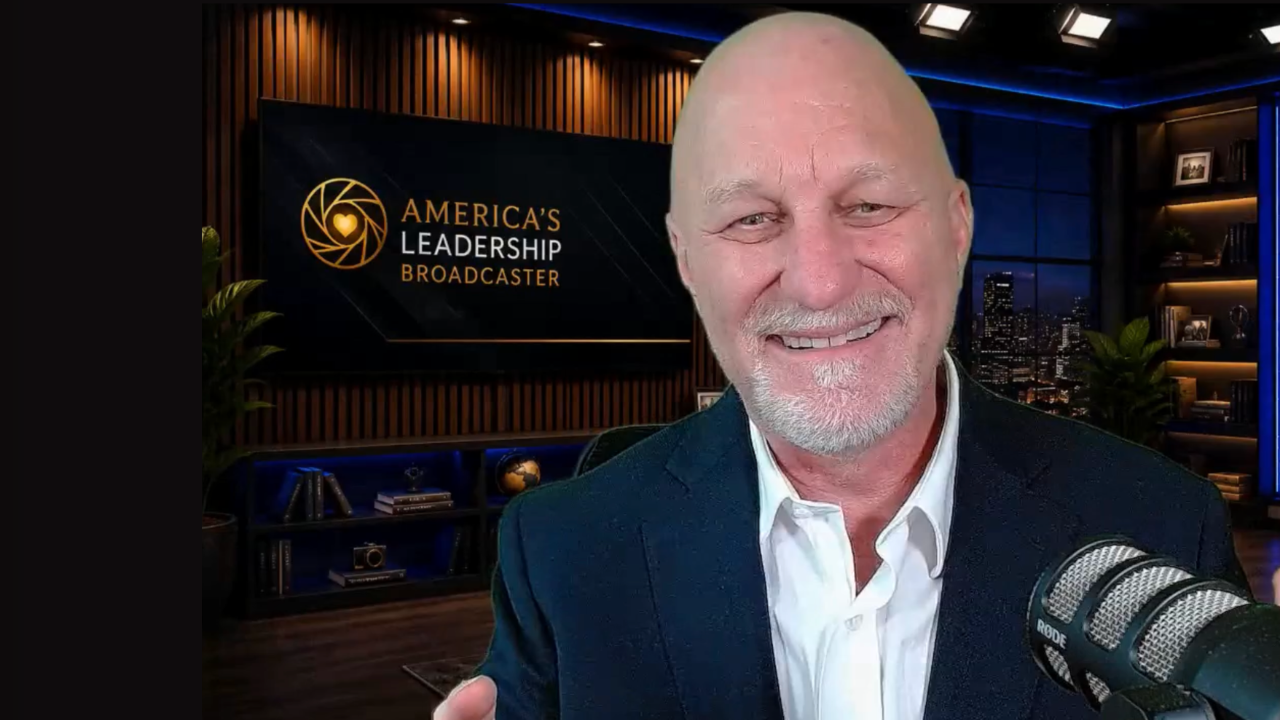
Over more than 35 years in broadcasting, hosting, interviewing, and producing, I have learned that effective camera presence begins with understanding what the audience experiences. As America’s Leadership Broadcaster™, I bring that perspective into my leadership communication coaching.
A camera captures a smaller space than a stage. Your movements need to fit that space while still expressing your personality and supporting your words.
Here is what I teach:
Your hands and arms should move as a natural expression of what you are saying.
When you explain a difference, a small gesture can help the audience see the distinction. When you describe growth, your hands can illustrate that movement. When you make an important point, a purposeful gesture can emphasize it.
The movement belongs to the meaning.
That principle also connects to Authentic Authority in my H.E.A.R.T. Method™. Your physical delivery should feel consistent with your voice, your intention, and who you are.

What the research tells us
In its observational analysis of TED Talks, Science of People reported that the most popular speakers averaged 465 hand gestures per 18-minute talk, compared with 272 for the least popular speakers. That finding shows an association; it does not establish that more gestures caused more views. I would never turn those numbers into a gesture target for a media interview.
My coaching takeaway is that your hands can contribute to an engaging message. The practical question is whether each movement helps the audience understand you.
Five ways to make your hands work with your message
1. Give your hands a comfortable place to rest
Before you begin, relax your shoulders and release unnecessary tension in your arms.
If you are seated, let your hands rest comfortably on your lap or lightly on the table. If you are standing, choose an easy resting position that allows movement without tightly clasping your hands.
You need somewhere comfortable to return between gestures.
2. Let the words lead the movement
Focus on the idea you want someone to understand.
If you are describing two options, a slight shift to either side can illustrate the choice. If you are explaining three steps, counting them on your fingers may help.
You do not need to choreograph every sentence. Allow your gestures to emerge from the thought you are communicating.
3. Match your gestures to the camera frame
Check your framing before recording or joining an interview.
A gesture that works in a wider shot may overwhelm a close-up. Keep movements comfortably within the available space, and avoid reaching toward the lens, where your hands can appear disproportionately large.
For a media interview, ask the producer how tightly you will be framed.
4. Allow the gesture to finish
You do not need constant movement to maintain attention.
Make your point, let the gesture resolve, and allow your hands to rest. That rhythm gives your delivery room to breathe.
Watch for repetitive habits such as tapping the table, rubbing your hands, or making the same chopping motion throughout every answer.
5. Record one answer and review it
Record a 60-second response to a question you might receive in an interview.
Watch it once with the sound off. Notice where your attention goes. Are your movements relaxed? Do your hands repeatedly interrupt the view of your face?
Then watch with the sound on. Do the gestures fit your words and the seriousness of the subject?
Choose one adjustment and record again. Build comfort through practice.
Learn my “Chicken Wings” Technique
Sometimes, a written explanation only takes you so far. You need someone to watch your delivery, demonstrate an adjustment, and help you feel the difference.
That is where my “Chicken Wings” Technique comes into the coaching conversation.
It is one of the techniques I teach clients who feel awkward about their hands and arms on camera. In a coaching session, we can work with your natural delivery and the situations you face—from media interviews to leadership videos and virtual presentations.
If you keep wondering what to do with your hands, let’s work on it together.
Visit my website and book a call to learn about my “Chicken Wings” Technique and how I can help you develop a more comfortable, confident camera presence.
Your message matters. Let your hands help make the human connection count.
Rich “Trigger” BontragerAmerica’s Leadership Broadcaster™ Leadership Communication Strategist | Executive Producer


Comments